Process
How it was made
From the written record to the tattoo chair: how ten traditions found their way onto one leg.
 Step 1
Research
It began in the archive. Lars Krutak's India: Land of Eternal Ink opened a record most of India has never seen: tattoos as prayer, as protection, as identity worn on skin.
Photo: Baiga back tattooing, via larskrutak.com
 Step 2
Guidance
Through that record I found Amit Arjel, a tattoo artist and anthropologist who has spent years among these communities, learning their motifs at the source. He taught me what each mark carries, and helped shape the sleeve.
 Step 3
Design
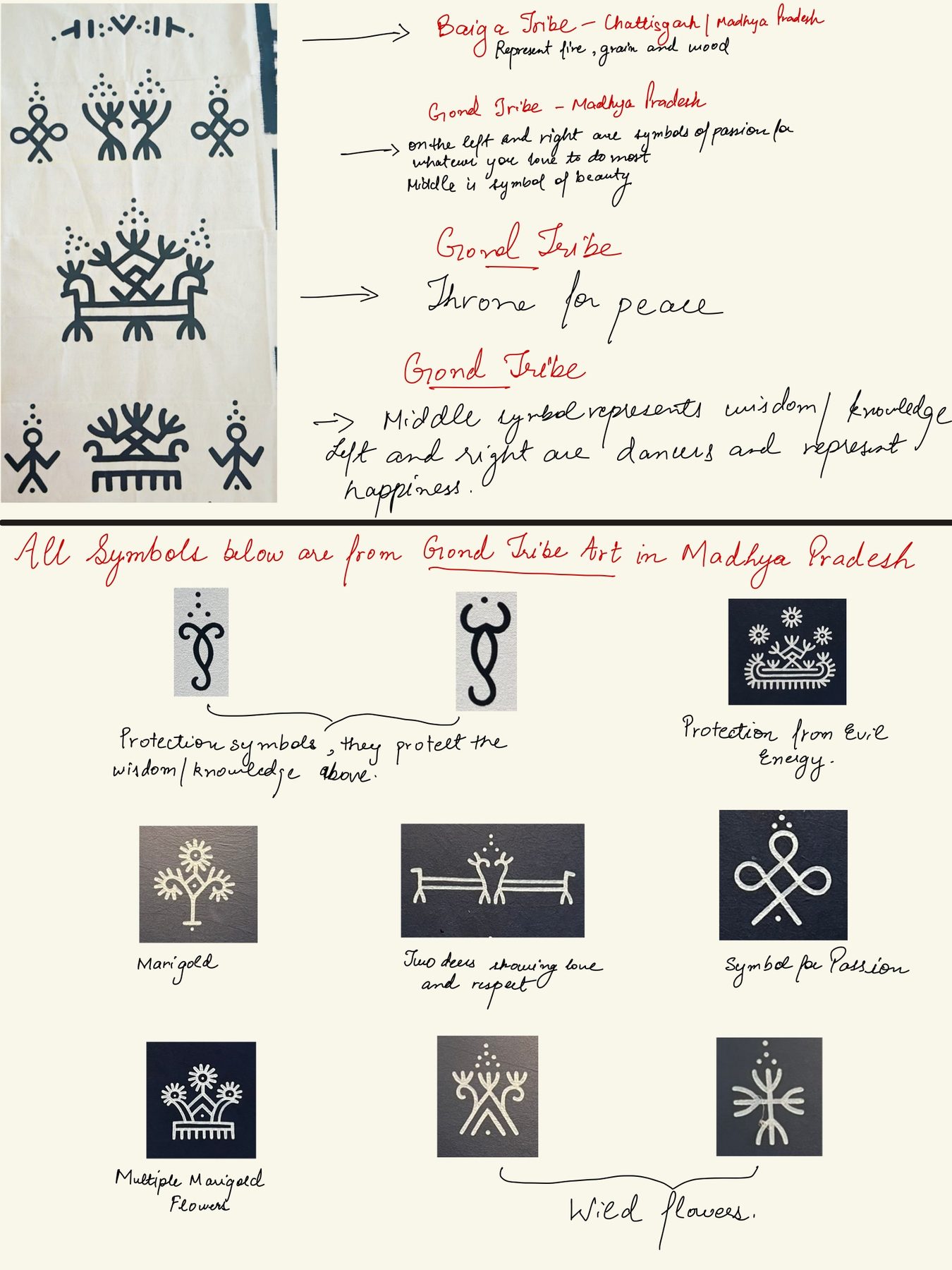
Each motif was mapped to its community, its region and its meaning on hand-annotated design sheets, then drawn as stencils and fitted to the leg.
 Step 4
Tattooing and filming
Toronto artist Jas tattooed the sleeve over many sessions, every one of them filmed for the documentary.