The people and place
The Konyak live in Mon district of Nagaland, with related villages across the borders of Arunachal Pradesh and Myanmar. Villages were historically governed by hereditary chiefs, the Angh, whose households also held distinct tattoo rights.
A record of the warrior
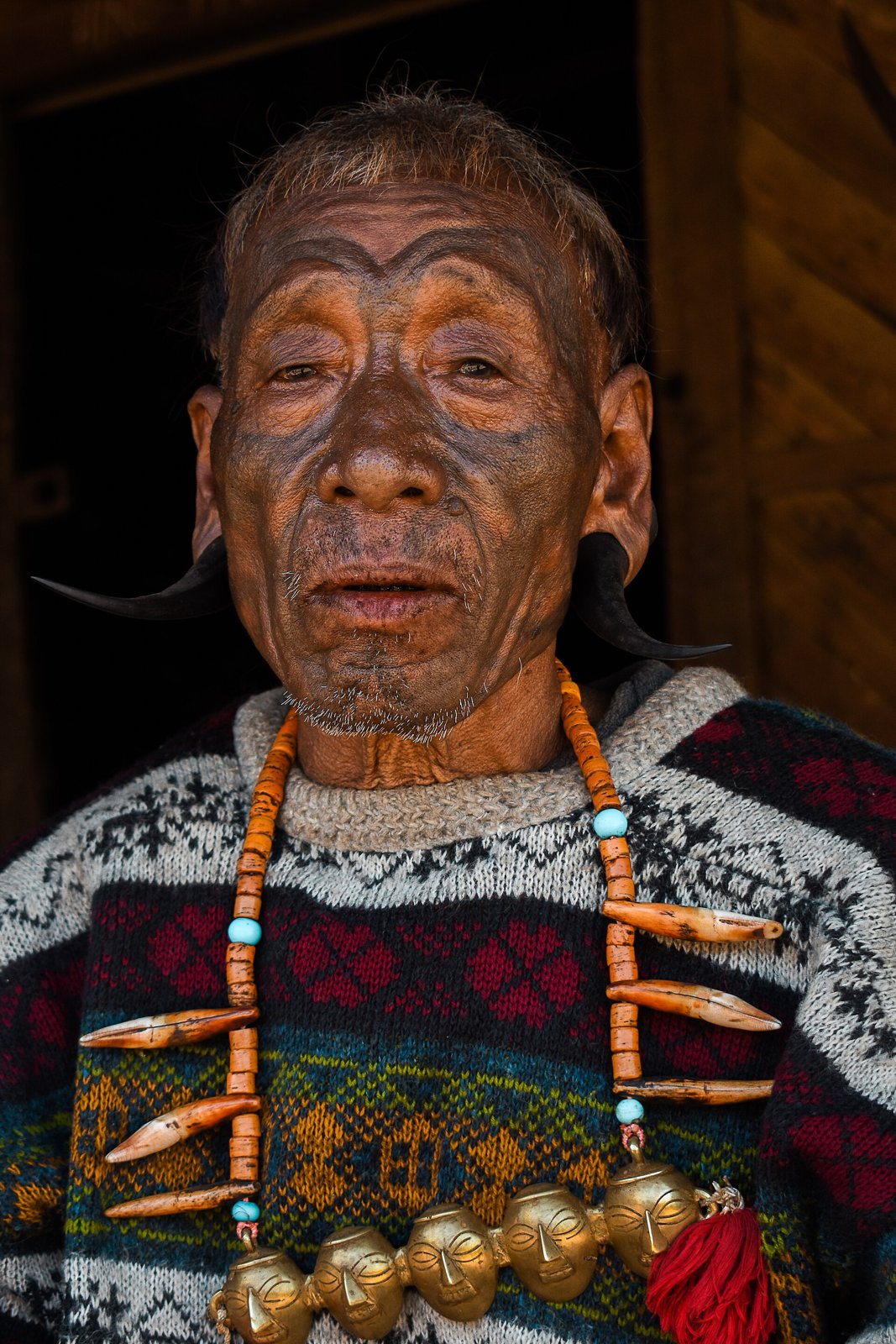
Facial tattoos marked a young man’s participation in his first headhunting raid. Further marks on the chest, neck and arms could record specific achievements. Lars Krutak describes V-shaped chest designs associated with the tiger, linking warriors to an animal whose power they sought to share.
Women were also tattooed, at different stages and on different parts of the body, with patterns associated with puberty, marriage and clan.
Who made the tattoos
Konyak accounts describe tattooing carried out by women, often from the chief’s lineage, using thorn or cane tools and a pigment of soot mixed with plant sap. The labour was skilled, painful and ritually charged, and the right to tattoo was itself a mark of status.
Continuity and change
Headhunting was suppressed during the twentieth century and ended in Mon district in the late 1960s and 1970s. Conversion to Christianity brought further pressure against the marks. The last tattooed warriors are now very old, and their faces have become the subject of photography, books and tourism. Writers including Phejin Konyak, herself a Konyak, have worked to record their testimony directly.