A wide geography
Bhil communities live across Rajasthan, Gujarat, Madhya Pradesh and Maharashtra. A single label therefore covers many local histories.
Women and marriage
One account from Madhya Pradesh describes designated women tattooists working through reciprocal help or modest payment. It records a bird mark called chirlya placed near a girl’s eyes before marriage, and treats tattooing after marriage as inauspicious in the community observed.
Marks carried onward
The same account describes tattoos as evidence of a life carried into the afterlife. This echoes beliefs documented elsewhere in central and western India, but similarity does not prove a single shared origin.
Limits of the archive
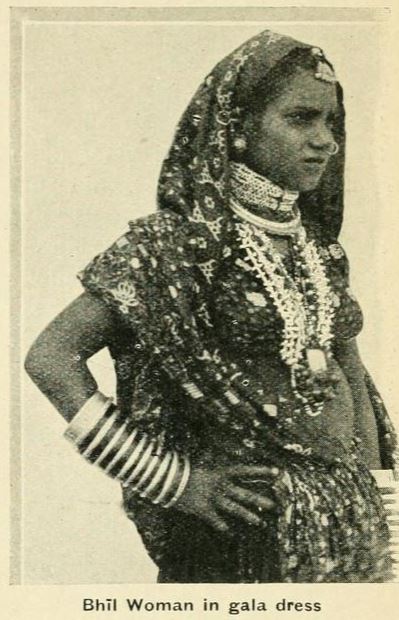
Detailed, community-led accounts of Bhil tattooists, tools and motif names remain difficult to locate. The colonial photograph on this page records a woman through an outsider’s camera. It is context rather than evidence for any specific motif meaning.