Madhya Pradesh and Chhattisgarh
Baiga
Endangered

For many Baiga women, godna marked belonging, life stages and a form of adornment understood to remain with the body beyond death.
Read the storyResearch archive
12 starting points for understanding who carried these practices, who made the tattoos, what the designs held, and what changed. Some are living, some endangered, some remembered only by their last bearers.
Madhya Pradesh and Chhattisgarh
For many Baiga women, godna marked belonging, life stages and a form of adornment understood to remain with the body beyond death.
Read the storyMadhya Pradesh and Chhattisgarh

Across Gond communities and Surguja district, godna is both a body practice and a field of women’s cultural labour, increasingly translated into cloth and paper.
Read the storyChhattisgarh

Members of the Ramnami Samaj tattoo the name of Hindu God Ram across their bodies, a devotional practice that began as a refusal of caste exclusion.
Read the storyMithila, Bihar

Godna places the visual history of Mithila on skin, while Madhubani carries related forms through painting. Its sun, moon and labyrinth imagery is closely related to godna, becoming a new tattoo lineage in itself.
Read the storyKandhamal and Rayagada, Odisha

Among Kandha women of Odisha, geometric facial tattoos are remembered by many elders as protection, a way of making themselves less visible to powerful outsiders.
Read the storyMon district, Nagaland
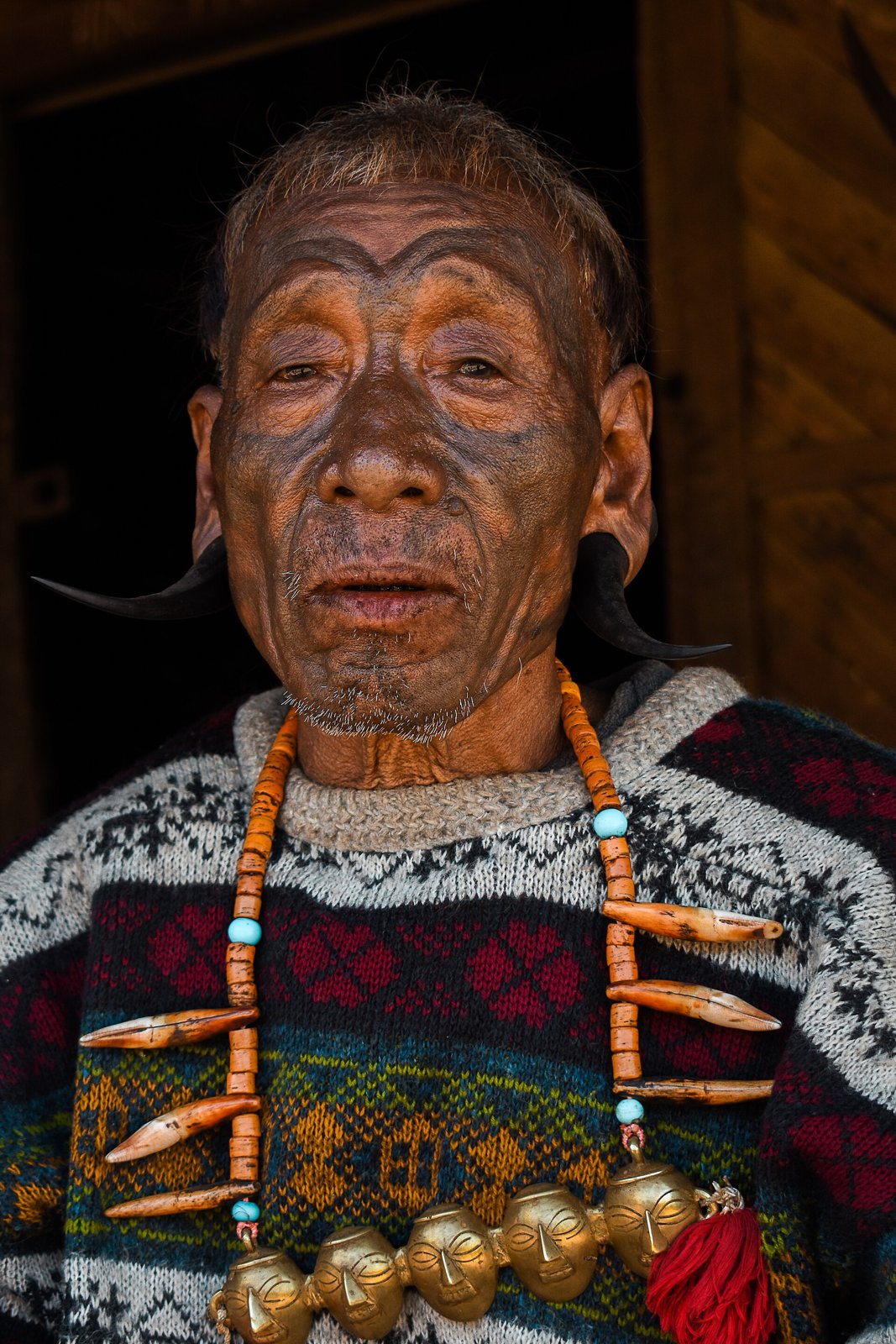
Konyak facial and chest tattoos recorded a man’s passage into warriorhood. They are now carried only by a small number of elders.
Read the storyZiro Valley, Arunachal Pradesh
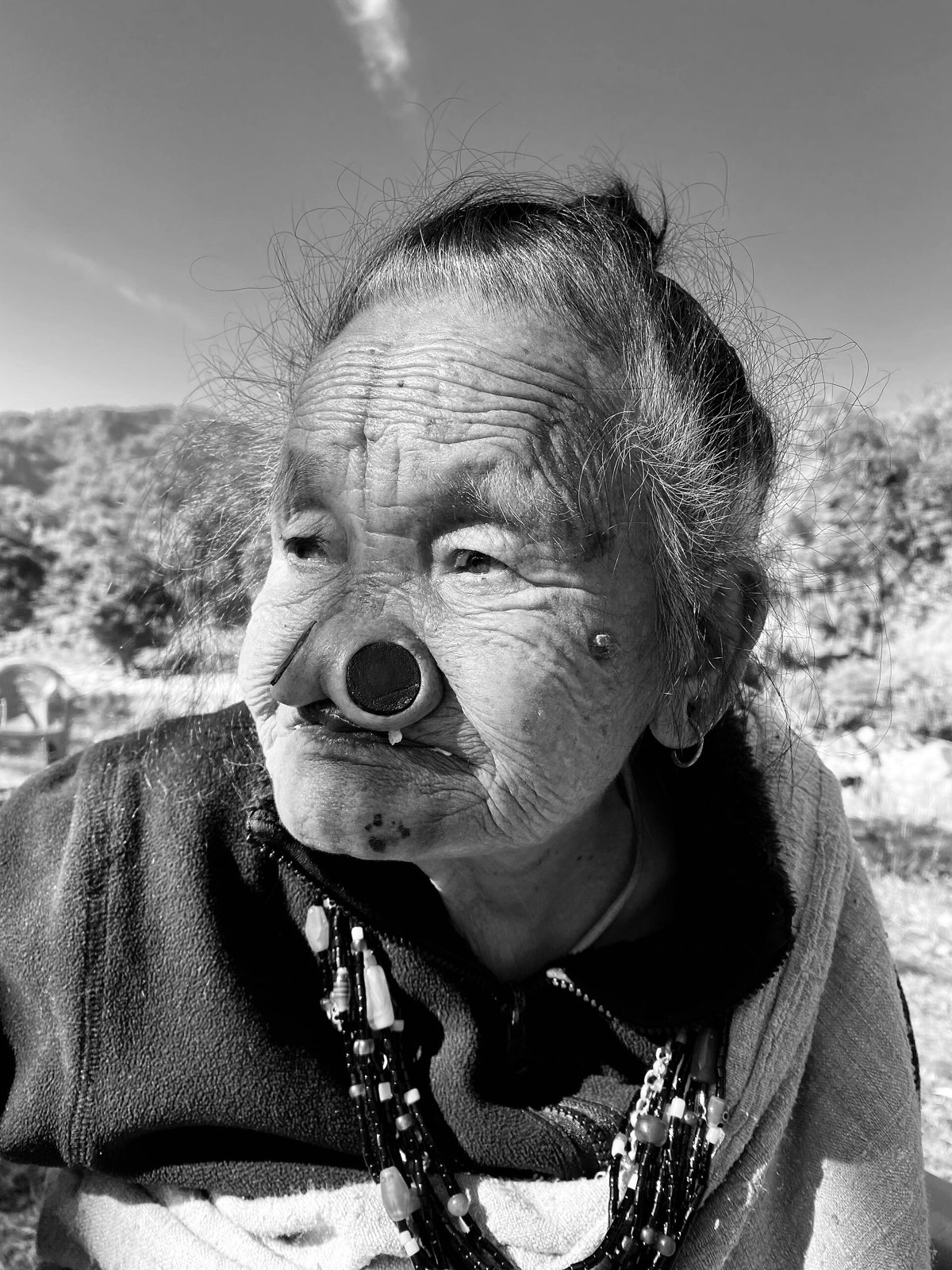
Apatani women once wore a line from forehead to nose and bars on the chin, a mark of identity now seen only on the oldest generation.
Read the storyNilgiri Hills, Tamil Nadu
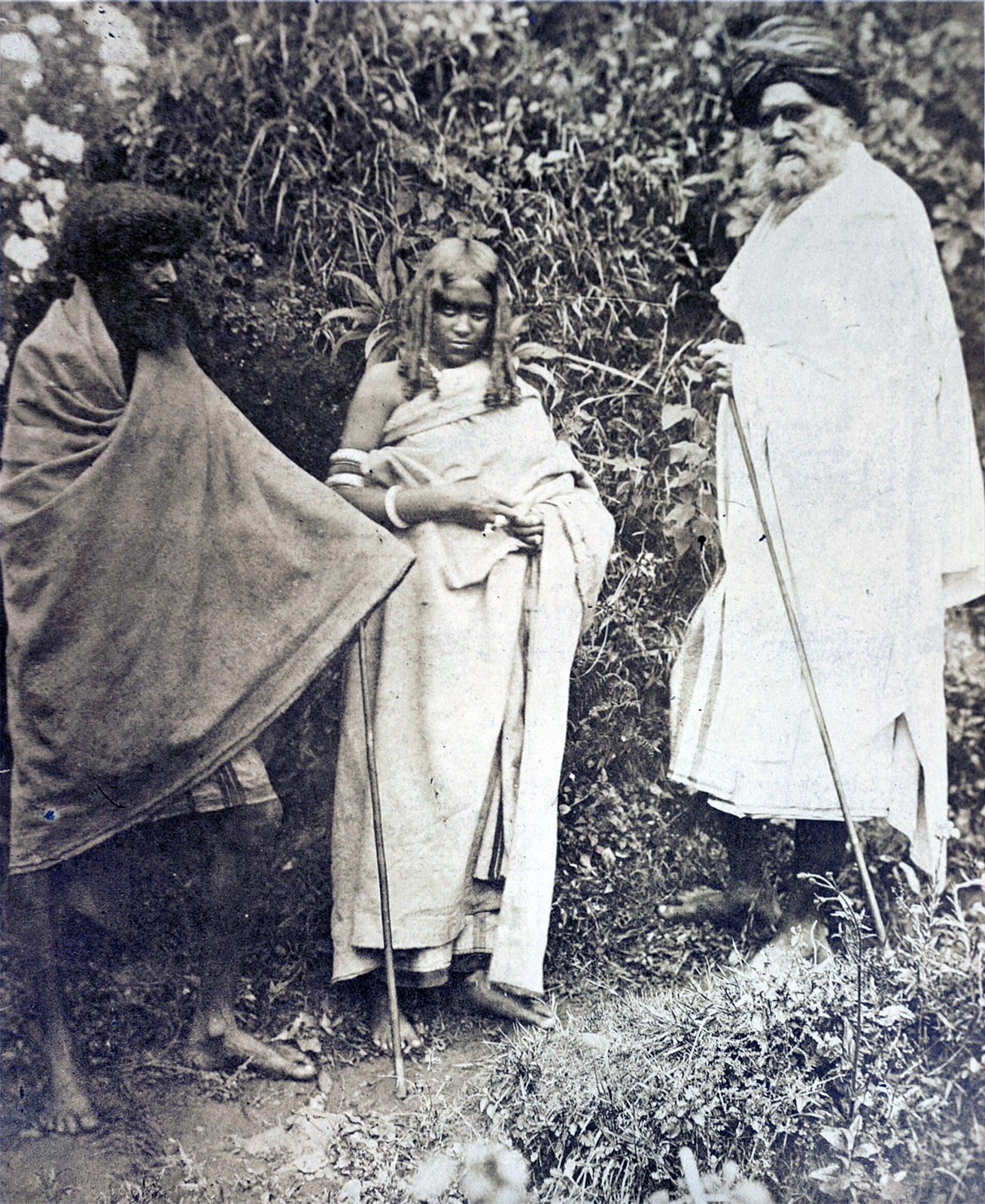
Toda women of the Nilgiris were tattooed with dots and rings across the body. The practice is now known mainly through colonial ethnography and community memory.
Read the storyTamil Nadu, Kerala and old Mysore

Pacchai kuthu, or green pricking, names the hand tattooing of South India, long carried by itinerant Kurava women known as Korathis.
Read the storyRajasthan and central-western India
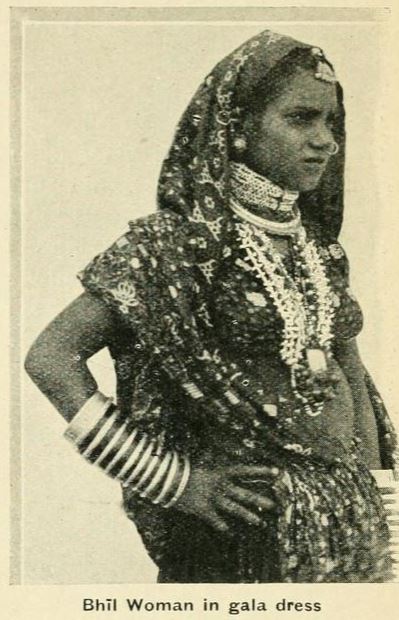
Bhil tattooing joined adornment and marriage to social and spiritual identity, but the surviving public record is fragmentary and regionally uneven.
Read the storyKutch and Saurashtra, Gujarat

Trajva formed a permanent visual language of adornment, protection, marriage and memory among several communities of Kutch and Saurashtra.
Read the storyMaharashtra

Warli is best documented as a painting tradition with its visual language now being carried into tattoo.
Read the story